
Deborah Hill and the Kalkaska County Clerk
Deborah Hill serves as the Kalkaska County Clerk. State practice makes the county clerk the clerk of the 46th Circuit Court of Kalkaska County, so her office is the working clerk of court for felony, major civil, and family cases heard at the county seat. The role reaches well past the courtroom. Hill is also clerk for the county Board of Commissioners, the Board of Canvassers, the Election Commission, the Jury Board, and the Plat Board, and she works as the county election coordinator.
The office keeps, files, and certifies court and county records. Staff take in new filings, log them, issue certified copies, and answer questions at the counter and by mail. Michigan runs a unified trial court in the 46th Circuit, so this office sits at the center of the county's court paperwork. It is the first stop for a certified court document and for many public-records questions.
Kalkaska County Clerk
Clerk: Deborah Hill
605 N. Birch Street
Kalkaska, MI 49646
(231) 258-3349
Fax: (231) 258-3337
dhill@kalkaskacourt.org
Monday to Friday, 8:00 a.m. to 5:00 p.m.
What the Kalkaska County Clerk Does
The Kalkaska County Clerk wears several hats at once. Some duties tie to the courts. Others tie to elections and county government. A short list shows how wide the job runs.
- Serve as clerk of the 46th Circuit Court and keep its case files.
- File and certify court documents and county records back to 1871.
- Issue marriage licenses under Michigan law.
- Run county elections as the county election coordinator and staff the Board of Canvassers.
- Clerk the Board of Commissioners and record its official actions.
- Handle Freedom of Information Act requests for county-held records.
- Accept personal protection order petitions and route them to the court.
Personal protection order filings run through the county clerk. A person who needs a PPO files the petition with the clerk, who then moves it to the court for a judge to review. That keeps the clerk at the front door of both routine filings and urgent safety matters.
Kalkaska County Clerk Records Back to 1871
Records housed in the Kalkaska County Clerk's office begin with the year 1871. That paper trail covers early court files, county board minutes, and other official records from the county's first decades. The same year, the register of deeds opened its grantor and grantee books, which marks the start of the county's formal record system.
The clerk welcomes genealogy research by mail or in person. Family historians use the office to trace ancestors through old court and county files. These records are fragile, so the office asks visitors to handle them with care and to plan a trip during regular hours. The county pairs its clerk files with a set of outside history tools on its genealogy links page.
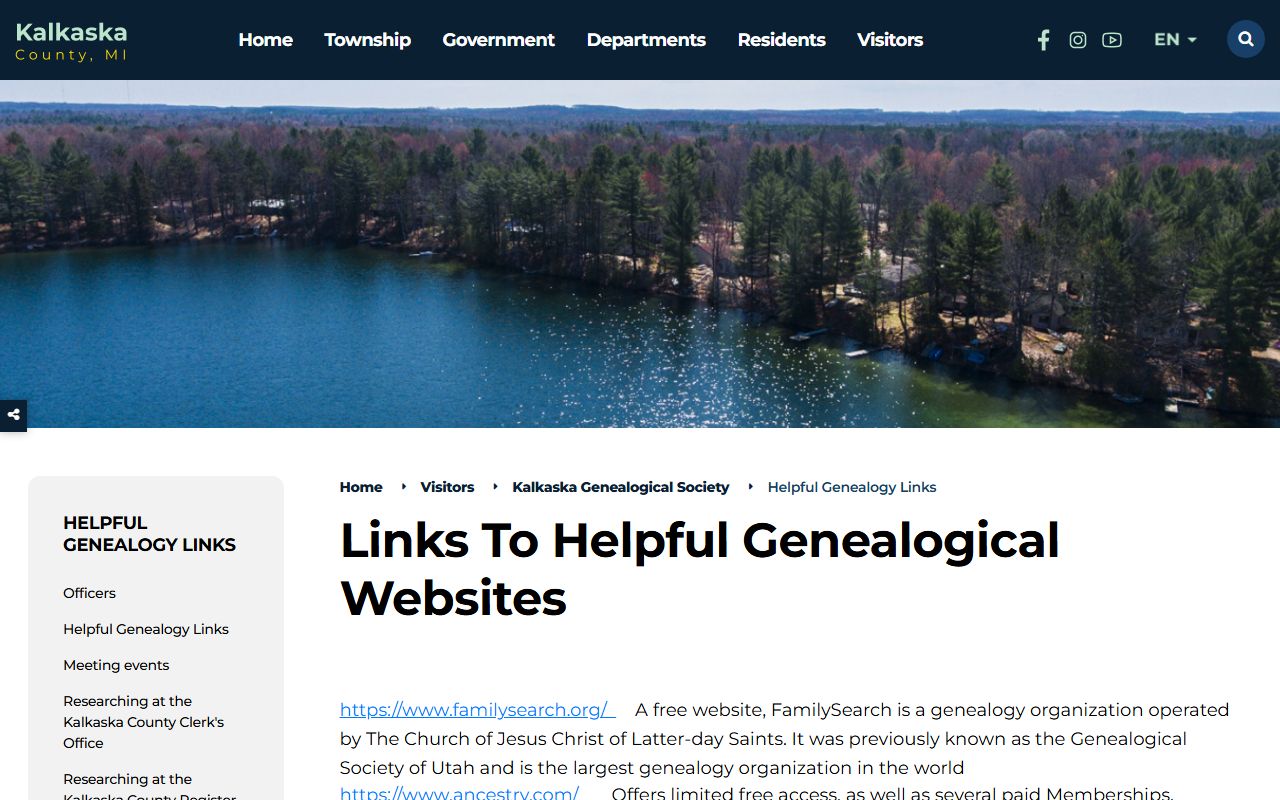
Those links point to state and regional archives that fill gaps the clerk's 1871 files cannot cover on their own. Between the two, a researcher can trace both the county's public record and the wider history around it.
How to Request a Certified Copy in Kalkaska County
A certified copy is an official record the clerk marks with a seal and signature. Courts, agencies, and title companies often accept only certified copies, not plain printouts. Getting one from the Kalkaska County Clerk follows a short path.
- Identify the case or record. Note the case number, the party names, and the year if you know them, and the clerk's staff can help match an old file.
- Contact the office. Call, email, or visit the counter at the county seat to confirm the record exists and to learn the current copy fee.
- Submit your request. Provide the record details and the number of copies in person, by mail, or through a FOIA request if the file is not open at the counter.
- Pay the fee. The office charges for the copy and the certification before it releases the document.
- Pick up or wait for mail. Collect the certified copy in person, or ask the office to mail it to the address you list.
A certified copy carries a raised or stamped seal. A plain online printout or an unofficial copy is not accepted for court filings, passports, or legal proof.
FOIA Requests to the Kalkaska County Clerk
When a record is not open at the public counter, the Freedom of Information Act is the fallback. Michigan's FOIA sits in MCL 15.231 and the sections that follow it. The county clerk points requesters to a public summary of FOIA procedures and to the request instructions and forms. The county spells out that path on its county clerk FOIA page.
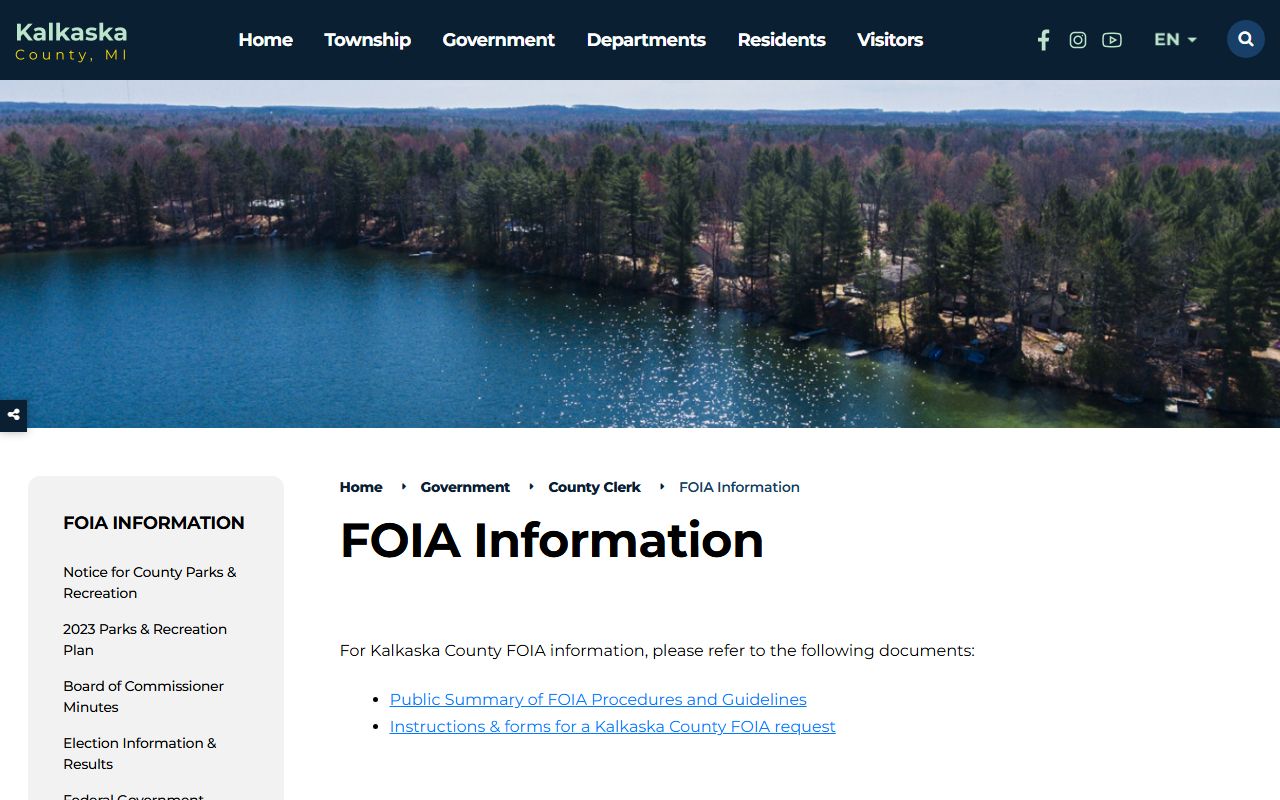
The page links both the public summary and the request form, so a requester knows the rules before filing. A complete request keeps the file moving. The office needs enough detail to find the record and a way to reach you about cost. The fields below cover a standard county FOIA request.
| Field | Required | Notes |
|---|---|---|
| Requester name | Yes | Person or business asking for the record. |
| Mailing address or email | Yes | Where the clerk sends the record or a cost estimate. |
| Daytime phone | No | Speeds up questions about the request. |
| Description of records | Yes | Name the file, case number, dates, or topic as closely as you can. |
| Preferred format | No | Paper copies, certified copies, or electronic files. |
| Fee acknowledgment | Yes | Agreement to pay allowable search, labor, and copy costs. |
| Signature and date | Yes | Confirms the request. |
Under MCL 15.233, the county must respond within the timeline the statute sets. It can grant the request, deny it, or release part of the file with exemptions applied. MCL 15.235 gives a requester the right to appeal a denial or a fee the requester believes is too high.
Marriage, Vital Records, and Elections in Kalkaska County
The Kalkaska County Clerk issues marriage licenses. A couple applies through the office, and the clerk keeps the marriage requirements and application document in the county forms center. Michigan sets the license fee and the 33-day window in which the marriage must take place. The county gathers these files, along with the FOIA forms, in its document center.
The same page lists clerk-office PDFs, so residents can download a form before they visit. Certified copies of a completed marriage record come from the state, not the local clerk. The Michigan Department of Health and Human Services keeps marriage records back to 1867 and divorce records back to 1897. The clerk issues the license, while the state issues the long-term certified copy. More detail on licenses and certified copies lives in the county's marriage and divorce records guidance.
As county election coordinator, the clerk runs elections, staffs the Board of Canvassers, and posts election information and results. The clerk page also links vital records, election data, and state and federal government resources, which makes the office a natural first stop for both court and civic paperwork.
Kalkaska County Clerk Fees
Fees at the Kalkaska County Clerk fall into a few groups. Some come from Michigan's court fee tables. Others come from marriage and FOIA statutes. Copy and search charges under FOIA are capped by law at the office's actual allowable cost. Michigan spells out those limits in the FOIA fee section, MCL 15.234.
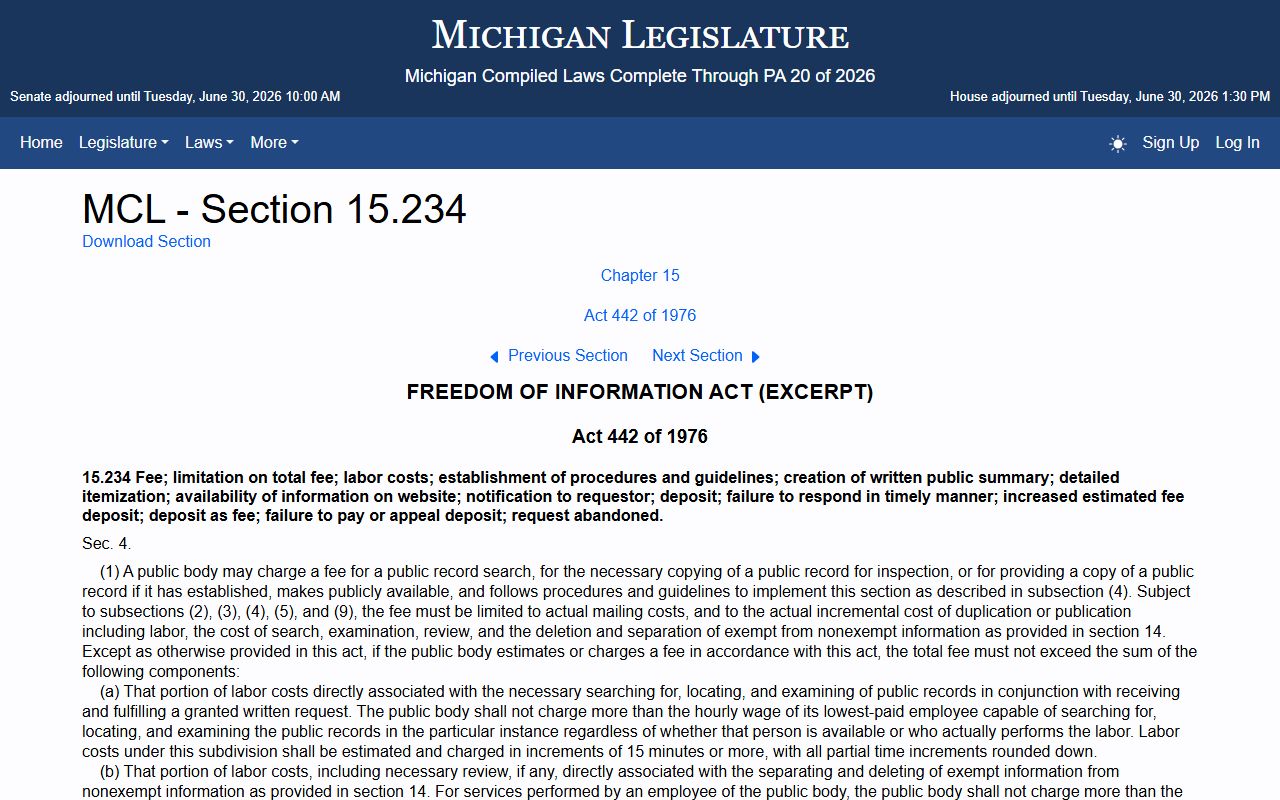
The statute lets a public body recover search, labor, and duplication costs, but not more than the law allows. The table below lists the fees the county and state materials confirm. Court filing fees follow the statewide circuit court fee schedule, while the marriage license fee is fixed by statute.
| Service | Fee | Authority |
|---|---|---|
| Marriage license | $20.00 | MCL 551.103 |
| Marriage ceremony performed by the court | $10.00 | Michigan court fee table |
| Circuit court civil case filing | $150.00 | Michigan circuit fee table |
| Civil e-filing system fee | $25.00 | Michigan court fee table |
| FOIA search, labor, and copies | Actual allowable cost | MCL 15.234 |
| Certified marriage copy (state vital records) | $34.00 for one copy | MDHHS |
Note: Copy and certification amounts can change, so confirm the current fee with the clerk's counter before you mail a payment.
What the Kalkaska County Clerk Does Not Handle
The county clerk does not run every records office at the county seat. The register of deeds is a separate office with its own registrar. Deeds, property records, land documents, and passports fall to that office, not to the clerk. You can see that split on the county's register of deeds page.
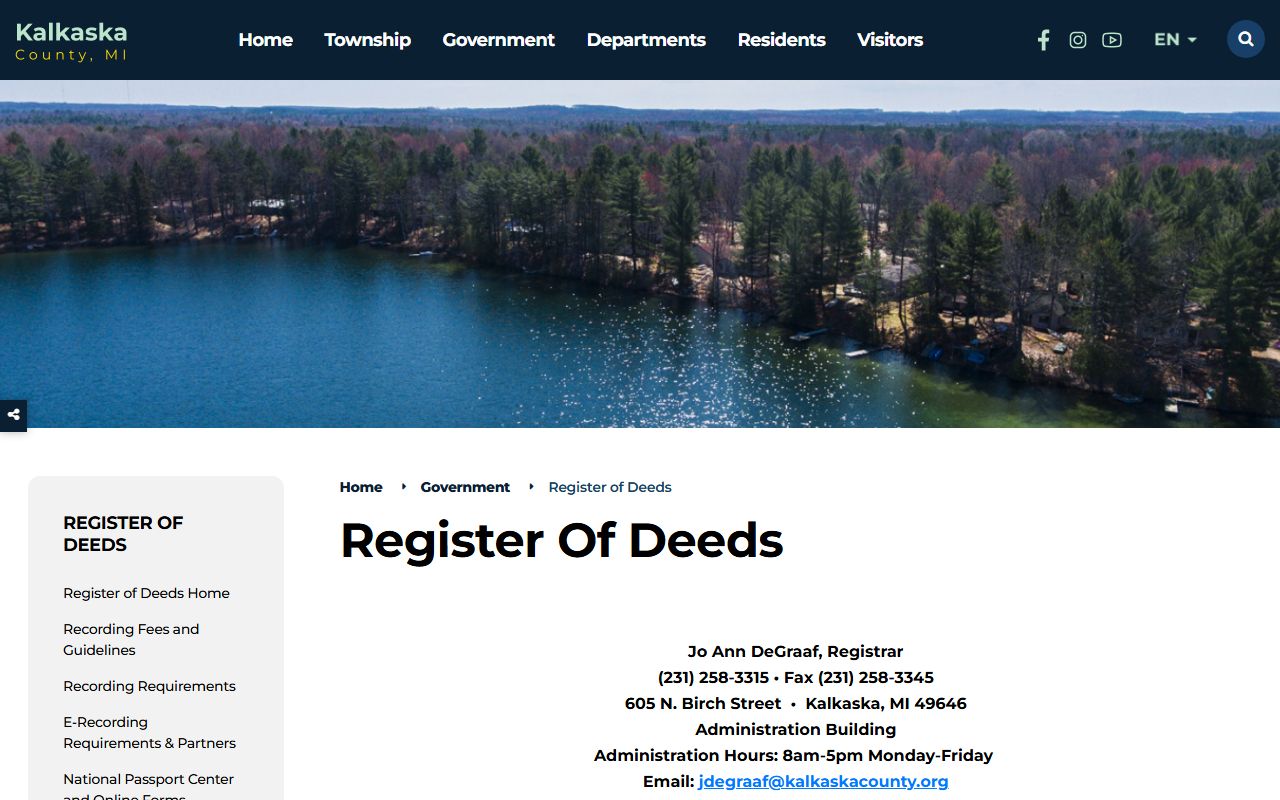
That office keeps grantor and grantee books back to 1871 and offers passport service and a free property-fraud alert, none of which run through the clerk. The clerk also does not host a searchable court-record database. Live case lookup and payment for district cases run through the 87-B District Court portal, not the clerk's counter. For older or non-digitized files, the clerk stays the office to call, and a FOIA request is the fallback when a record is not posted online. Felony and major civil files sit with the county's circuit court, which the clerk serves.
The clerk of court files and certifies court records but does not decide cases, set bond, or give legal advice. Those duties belong to the judges and to licensed attorneys.